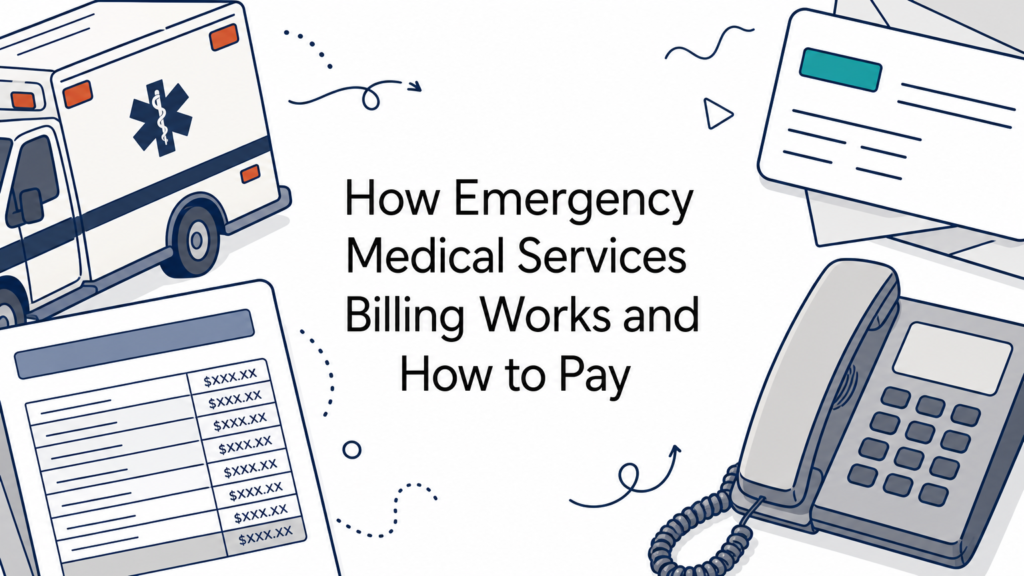
You got an ambulance bill in the mail, and now you need to know who sent it, what it covers, and how to pay it. That is a common spot to be in. Emergency medical services billing is handled by a mix of city fire departments, county agencies, private ambulance companies, and outside billing vendors, so the bill rarely points to one obvious place.
Here is the short answer. Find the billing company or agency name on your statement, then use the phone number or payment portal printed on it. If the statement is missing, call the non-emergency line of the EMS provider that transported you. Most bills combine a base transport rate, mileage, and any treatment supplies. Insurance is usually billed first, and you owe the remaining balance.
Below, you will see how EMS charges are built, how insurers and Medicare process them, and what to do if the amount looks wrong. We also cover payment options and how to ask for an itemized bill. At InfiniteRCM, we handle billing for healthcare providers, so we explain it the way the billing office sees it.
Why emergency medical services billing matters to you
Ambulance bills arrive when you are least ready for them. You may still be recovering, and the statement shows a large number with little explanation. Understanding the charges early helps you avoid late fees, collections, and paying more than you owe.
Why ambulance bills are different
Ground ambulance rides often cost $1,000 to $3,000 or more, depending on distance and the care given along the way. You also rarely get to choose the provider. Whoever answers the 911 call takes you, even if that agency is out of network with your insurer.
Federal protection is thinner than most people expect. The No Surprises Act covers air ambulances, but ground ambulances are excluded. Whether you can be balance billed depends largely on your state and your plan.
You can’t choose your ambulance, but you can choose how you respond to the bill.
What is at stake for you
Three things are on the line if you ignore or misread the statement: your wallet, your credit, and your claim rights. Here is how each one plays out:
- Money: Billing errors, such as wrong insurance on file or duplicate charges, can leave you paying for something your plan should cover.
- Credit: Unpaid balances can be sent to collections, and that can follow you for years.
- Deadlines: Insurers and billing offices set time limits for claims, appeals, and payment plans. Missing them narrows your options.
A few minutes spent reading the statement now is far cheaper than untangling a collections account later.
How to pay your emergency medical services bill
Emergency medical services billing offices usually offer more than one way to pay. Find the account number and payment address on your statement first, because every method below needs them.
Common ways to pay
Agencies typically accept card, check, or money order, and many offer online payment:
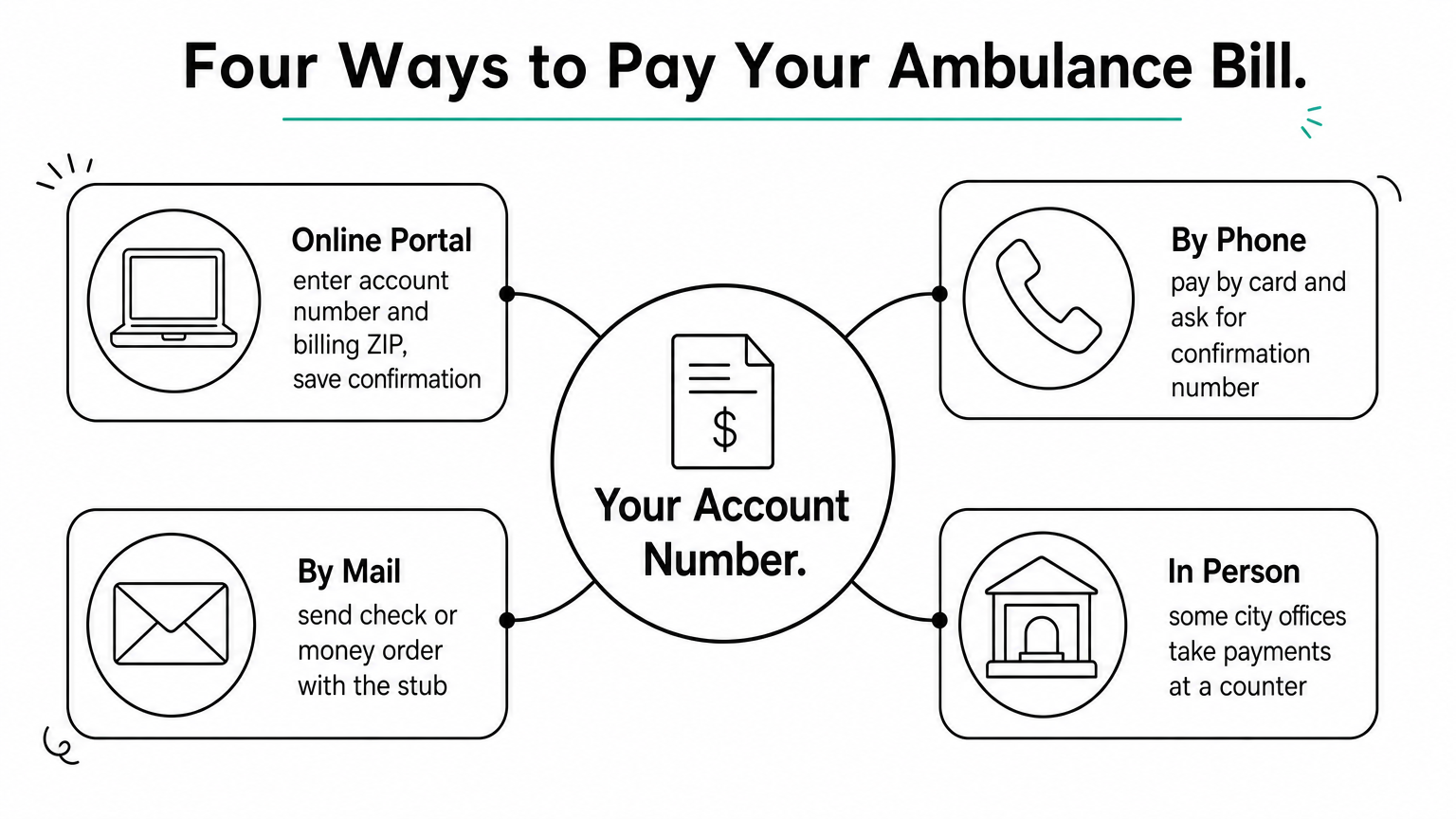
- Online portal: Enter your account number and the billing ZIP code. Save the confirmation page.
- Phone: Call the billing number and pay by card. Ask for a confirmation number.
- Mail: Send a check or money order with the payment stub. Never mail cash.
- In person: Some city and county offices take payments at a counter.
Before you pay
Pause if the statement says "this is not a bill" or lists insurance as pending. Confirm your insurer has processed the claim, since paying early can leave you covering the full charge instead of your share. Also verify the sender is real by calling a number you looked up yourself, because scammers imitate billing notices.
Pay only after insurance has processed the claim and you’ve confirmed who is asking.
Keep every receipt and confirmation number until the balance shows zero.
How to find your ambulance provider’s billing page
Start with what you already have
Your statement, text message, or insurance explanation of benefits (EOB) names the billing agency and account number. Search that exact name with "ambulance billing" to reach the payment page. Then confirm the web address belongs to the agency or a vendor it lists on its own site.
- Look for a "Pay my bill" link on the city, county, or company website.
- If the name is unfamiliar, search "[your city or county] EMS billing."
- Match the date of service on the EOB to the charge.
If you have no statement
Call the non-emergency number of the fire department or ambulance company that took you, and ask for the billing office. Your insurer can help too, since the claim lists the transporting provider and date of service. Ask for the EMS billing phone number and write it down.
Trust a billing page only if you reached it from the agency’s own website or a number you verified.
How ambulance charges and insurance coverage work
What goes into the charge
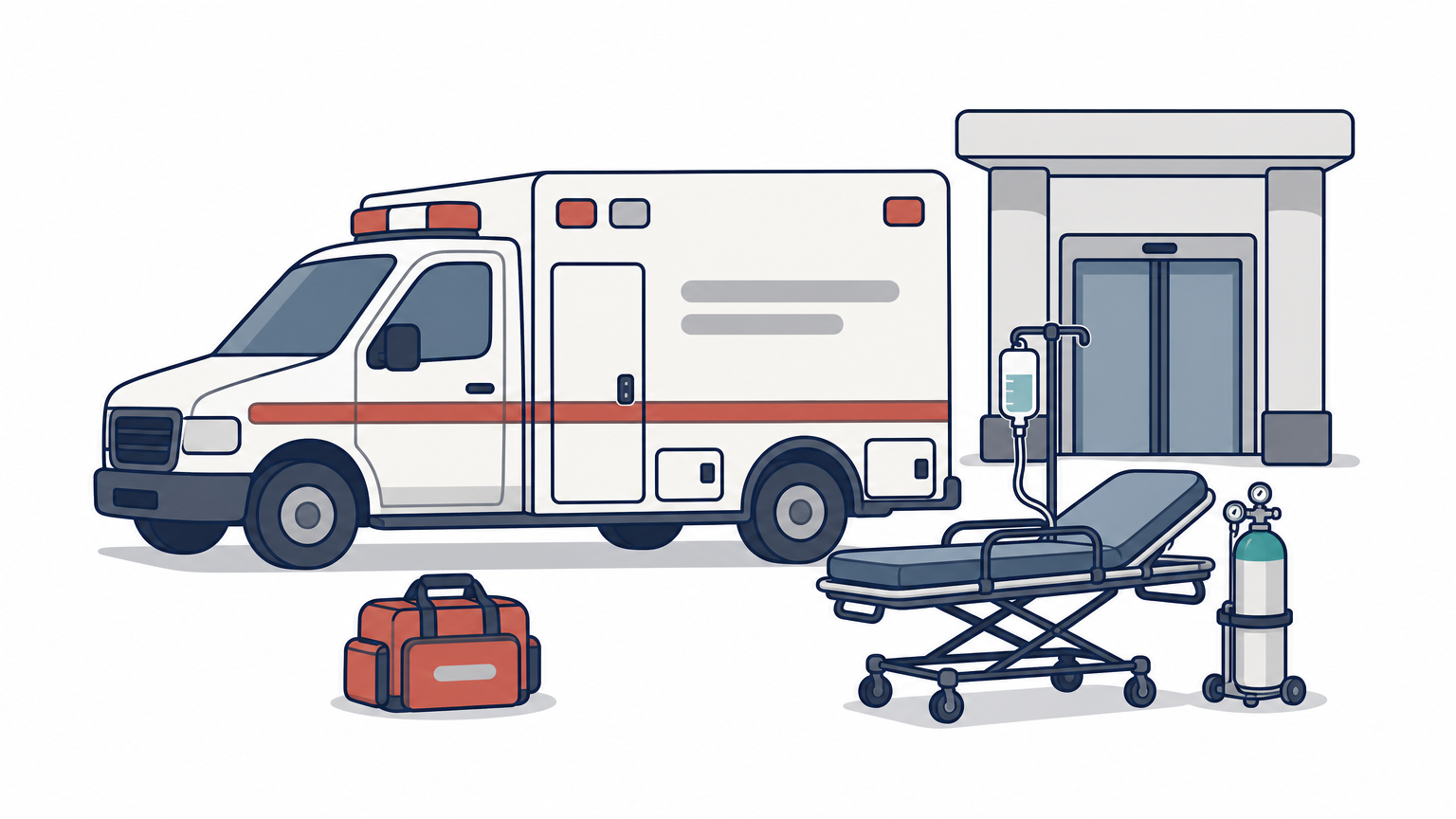
Every bill starts with a base rate set by the level of care, then adds mileage and supplies. Basic life support (BLS) costs less than advanced life support (ALS), which brings a paramedic and more advanced treatment.
| Line item | What it covers |
|---|---|
| Base rate | BLS or ALS level of service |
| Mileage | Loaded miles from pickup to hospital |
| Supplies | Oxygen, IV fluids, medications |
How insurance pays
Medicare Part B generally pays 80% of the approved amount after your deductible, but only when the ride was medically necessary. You owe the other 20%, unless a supplemental plan picks it up.
Commercial plans vary. Check whether the agency is in network, then read your EOB for the allowed amount. If the bill is higher, your state’s balance billing rules decide whether you owe the difference.
Insurance pays the allowed amount, not the amount printed on the bill.
What to do if you can’t pay or disagree with the bill
If you can’t pay in full
Call the billing office before the due date. Many offices that handle emergency medical services billing offer payment plans and hardship or charity care programs. Ask what income documents they need.
- Get any plan in writing.
- Ask them to hold the account from collections while your application is under review.
Silence costs you more than a phone call ever will.
If the amount looks wrong
Request an itemized bill and compare it with your EOB. Check the date of service, the mileage, and whether BLS or ALS was charged. Errors happen, and a quick call can fix a wrong insurance record or a duplicate charge.
If your insurer denied the claim as not medically necessary, file an appeal and ask for the denial in writing. A short letter from the treating physician helps. Medicare gives you 120 days from the date on your Medicare Summary Notice to request a redetermination.
Keep a log of every call with the date, the name of the person, and what they promised. If the bill is already in collections, ask for written debt validation before you pay anything.
Key points to remember about your ambulance bill
Emergency medical services billing looks confusing, but the steps are simple. Identify who sent the bill, confirm your insurer has processed the claim, and pay only through a portal or phone number you have verified yourself.
Charges come from a base rate, mileage, and supplies, and insurance pays the allowed amount, not the printed total. If something looks off, ask for an itemized bill and compare it with your EOB. If you can’t pay, call before the due date and ask about payment plans or hardship programs.
Billing offices deal with this maze every day. If you run a practice or an EMS agency and want fewer denials, faster collections, and clearer patient statements, see how InfiniteRCM’s medical billing and revenue cycle management services can cut denials and speed up payment for your team.