The best medical billing services California practices can hire pair payer knowledge with clean claim submission, active denial follow-up, and pricing you can read on one page. InfiniteRCM suits practices that want a fully remote, services-only partner. CareCloud fits groups that want software and billing from one large vendor. CureMD fits practices that want billing tied to their EHR. Practolytics fits practices that want an audit before they commit.
California makes billing harder than it looks. You bill commercial plans, Medicare, and Medi-Cal, the state’s Medicaid program, and each has its own edits, deadlines, and appeal rules. One weak step, such as a skipped eligibility check, produces denials that sit in accounts receivable for months.
This guide compares four options, then shows you how to choose among any California billing vendors: what to measure, what billing services cost, and whether you need a Los Angeles office. InfiniteRCM publishes this blog and is listed first, so check its claims against references, as you would for every vendor.
1. InfiniteRCM
InfiniteRCM is a fully remote, cloud-based billing and revenue cycle company based in Chester, New Jersey. It works with solo providers, clinics, and large organizations from a distance, so your location in California does not limit you.
What it offers
The core service is revenue cycle management: eligibility verification, clean claim submission, payment posting, denial management, and financial reporting. Most claims go out within 24 to 48 hours after charge entry through secure clearinghouses. Around that core sit four add-ons:
- AR recovery support for unpaid claims, underpayments, denials, and appeals
- Credentialing and enrollment, including CAQH profiles and NPI registration support
- Prior authorization from requirement checks to payer follow-up
- Medical virtual assistants for billing, scheduling, and insurance verification
A partner that also handles credentialing and prior authorization removes the handoffs where claims usually stall.
Who it suits and how pricing works
InfiniteRCM suits practices with high denial rates, long A/R days, or burned-out billing staff that want to keep their current EHR. It accesses your existing systems remotely, so you buy no software, and onboarding takes a few days to a few weeks depending on setup. Dedicated account managers are available for communication and support.
The company reports a 99% clean claim rate, 40% faster collections, and 60% fewer denials across 500+ providers. Treat those as numbers to verify with references. Pricing is described as transparent with no hidden fees, and a monthly contract cancels with 30 days written notice. Ask directly about its Medi-Cal experience in your specialty.
2. CareCloud
CareCloud is a national healthcare technology company that sells medical billing alongside its software and runs a dedicated page for California providers. It positions its service as end-to-end billing with faster claim processing.
What it offers
Expect claim submission and follow-up, payment handling, and revenue cycle support for physician practices. The distinguishing feature is the platform: CareCloud sells EHR and practice management software too, so billing can run on the same system your clinicians use.
- Claim submission and processing
- End-to-end revenue cycle support
- Software platform offered alongside the billing service
One vendor for software and billing means fewer integration gaps, but also one vendor to leave if things go wrong.
Who it suits and how pricing works
CareCloud suits multi-provider groups that are comfortable with a platform-plus-services model and want a large vendor behind them. Solo practices that like their current EHR may find a bundle more than they need.
Before signing, ask what happens to your data and workflows if you leave. A bundled contract can make switching later harder than switching a billing-only service. Get the fee model, any setup charges, and the term in writing.
3. CureMD
CureMD is a software company whose billing services sit on its EHR and practice management platform. It markets directly to California physicians and says it helps local providers streamline claims and increase revenue.
What it offers
The appeal is billing run by the company that builds your EHR. Charges, claims, and payments live in one system, which cuts the data re-entry that creates coding and demographic errors.
- Claim management for physician practices
- Billing services paired with its EHR and practice management software
- Reporting from the same platform your front desk uses
Billing and EHR from one vendor works best when you actually want that vendor’s EHR.
Who it suits and how pricing works
CureMD suits practices already on its software, or ready to move to it. If you use another EHR, confirm the integration in detail: which data flows automatically, what is keyed by hand, and who fixes interface errors.
On cost, ask whether billing fees change if you use the software. Some vendors price software and services together, which hides the real cost of each. Ask for them itemized separately so you can compare them with a billing-only quote.
4. Practolytics
Practolytics is a services-focused revenue cycle company that publishes a California billing guide and offers a free billing audit. It describes itself as an extension of your team rather than a claims-submission vendor.

What it offers
Its listed services cover coding review, eligibility verification, claim scrubbing and submission, denial management, payment posting, and A/R follow-up. It also lists credentialing support, insurance contract support, and performance reporting.
- CPT and ICD-10 coding and review
- Denial management and A/R follow-up
- Credentialing and insurance contract support
- Performance reporting with EHR/EMR integration
An audit before you sign shows you where revenue leaks, so you negotiate from facts instead of promises.
Who it suits and how pricing works
Practolytics suits practices that suspect they are losing money but cannot say where. The free audit lets you see denial patterns and A/R problems before any contract. Multi-specialty groups may value its specialty-specific workflows, though you should ask which specialties it bills most.
Treat the audit as an assessment, not a commitment. Ask for the scope of the proposal line by line, including setup, coding, credentialing, and reporting, so a low headline fee does not hide extras.
How to choose a California billing company
Choose by measured results and written terms, not by city or brand name. Whichever vendor you pick, collect the same five facts and compare them side by side.
What to measure before you sign
Ask each vendor for its numbers on practices like yours, and for references. These targets are common industry yardsticks, not guarantees.
| Metric | What to ask | Strong result |
|---|---|---|
| Clean claim rate | Share of claims accepted on first submission | 95% or higher |
| Denial rate | Share of claims denied, with top reasons | Below 5% |
| Days in A/R | Average time to collect | Under 40 days |
| Medi-Cal experience | Written answer plus a reference | Active Medi-Cal clients |
| Reporting | Monthly detail by payer and by denial reason | Included in the fee |
If a vendor cannot show these numbers by specialty, you are buying a promise, not a result.
What billing services cost
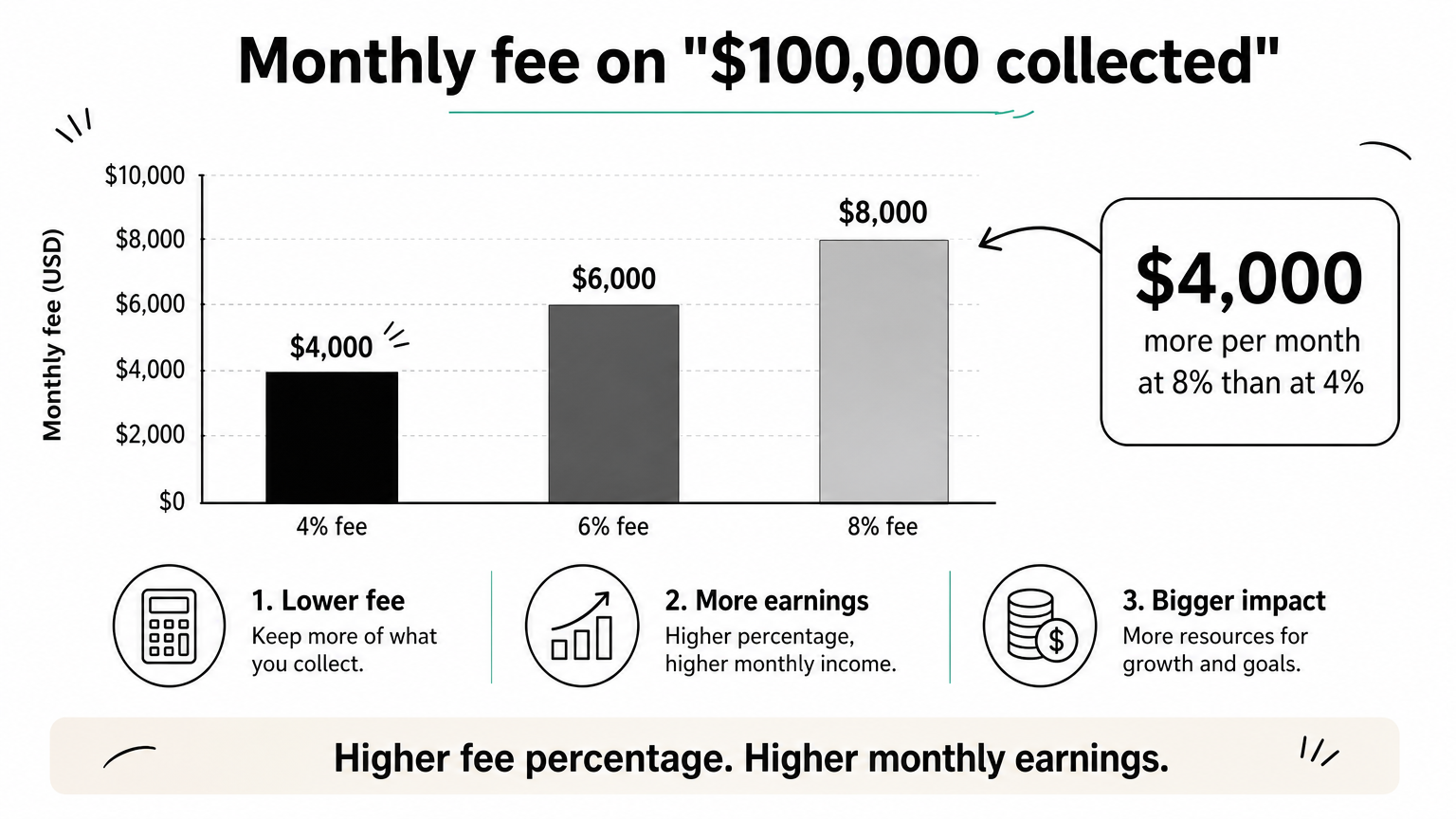
Many companies charge a percentage of monthly collections, commonly 4% to 8%. Others use flat monthly fees, per-claim pricing, or a hybrid. Say your practice collects $100,000 a month. At 4% you pay $4,000, at 6% you pay $6,000, and at 8% you pay $8,000.
The cheapest quote is not always the lowest cost. The $2,000 monthly gap between 4% and 6% disappears if the cheaper vendor leaves $2,000 of denied claims unworked. Ask about setup fees, coding charges, credentialing fees, and contract terms before you compare.
Do you need a Los Angeles vendor?
No. Medical billing services in Los Angeles do not have to come from an office in Los Angeles. A remote vendor works inside your EHR and clearinghouse, so what matters is payer knowledge. Ask for references from California practices in your specialty, and sign a HIPAA business associate agreement before sharing any patient data.
Choosing your billing partner
Pick the vendor that can show clean claim rate, denial rate, and days in A/R for practices like yours, and that puts pricing and scope in writing. Bundled platforms like CareCloud and CureMD suit practices that want software and billing together. Practolytics suits practices that want an audit first. InfiniteRCM suits practices that want a remote billing partner that works inside the EHR they already have, with credentialing, prior authorization, and AR recovery under one roof.
Whatever you choose, compare at least two proposals on the same metrics and ask every vendor about Medi-Cal. If you want to see how InfiniteRCM would handle your claims, share your specialty and monthly claim volume with InfiniteRCM.